









Business Policy

Summary
The Green Party will deepen business relationships with communities, encourage innovation, and regulate business to prevent both environmental and social harm. It will do this by reforming regulatory agencies, requiring accessibility, supporting the Māori economy, supporting new business models, promoting local business, co-investing in skills, and increasing access to academic research and local institutions of learning.
OUR VISION
Our businesses are locally celebrated, nationally valued, and internationally renowned for their economically successful, environmentally sustainable, and socially responsible practices.
Values and Principles
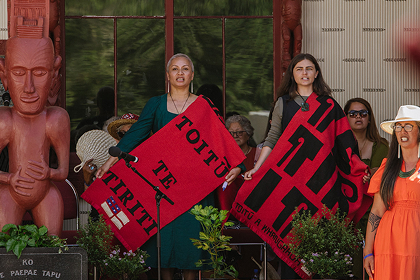
Honour Te Tiriti o Waitangi:
Te Tiriti o Waitangi and He Whakaputanga should actively shape the practices of all businesses operating in Aotearoa New Zealand, including their products, their practices, and their use of resources.
Ecological Wisdom:
Environmental sustainability is integral to business success and economic stability. Short-term profit must not be prioritised over long-term environmental health. Businesses and investors must prioritise accessible, regenerative, and circular activity across all sectors.
Social Responsibility:
Businesses should be active participants in positively shaping and supporting society. Businesses create value beyond profit and must focus on stakeholders beyond shareholders.
Appropriate Decision-Making:
Staff and business owners flourish in a collaborative, safe, accessible, and respectful environment.
Non-Violence:
Businesses should protect the wellbeing of their employees, customers, and supply-chain, and prevent harm to affected communities and ecosystems.
Fair Competition:
Local businesses should be protected from threats from unfair economic activity, including overseas activity.
Collaboration:
Businesses are vital in tackling complex challenges but cannot do it alone. Working with others, including other businesses within a competitive environment, can help address them.
Innovation:
Businesses should actively develop accessible, efficient, and sustainable practices and technologies. Businesses should be adaptable and build resilience to a changing business environment.
Shared Benefits:
The benefits derived from resource use should not be concentrated, but shared across society.
Responsibility for Harm:
Businesses are responsible for fairly compensating for any harm they cause or resources they use.
Strategic Priorities
- Reforming market structures in industries that are consistently dominated by a few large firms, making excessive profits, overcharging consumers, exploiting workers, or having adverse social and environmental impacts. (1.1.2)
- Regulating businesses operating in Aotearoa New Zealand to be socially and environmentally responsible throughout the lifecycle of their operations, including the whole supply chain, repair and resource recovery, and remediations after close of business. (2.1)
- Regulating and penalising marketing practices that misrepresent a company's social, ethical, environmental, or economic commitments and practices. (2.4.1)
- Implementing strategies to connect specific industries with educational institutions, technologies, and international expertise. (3.1.3)
- Supporting relationships between Māori businesses and non-Māori businesses as suppliers and partners. (4.1.2)
Connected Policies
The Government makes many decisions in other policy areas that affect businesses. See, for example, our Government in the Economy, Workforce, Trade and Foreign Investment, and Research, Science, and Technology Policies.