The following speeches were delivered at the Green Party 2026 AGM.
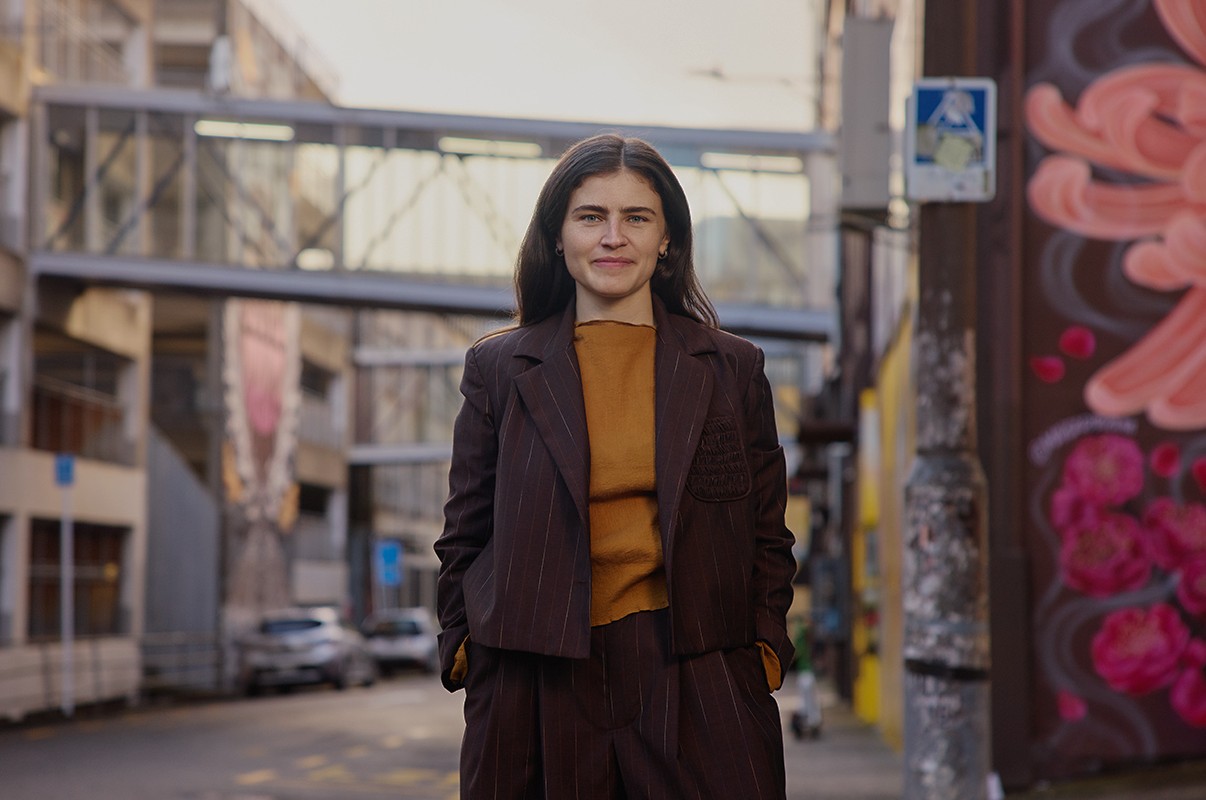
Chlöe Swarbrick
Ko te mea tuatahi, tēnei te mihi ki ngā mana whenua o tēnei rohe. Tēnā koutou.
Ko te mea tuarua, ka mihi au ki a koutou, kua tau mai nei i tēnei wā. No reira, e ngā mana, e ngā reo, e ngā rau Rangatira mā, tēnā koutou, tēnā koutou, tēnā koutou katoa.
The Buy Kiwi Made campaign turns 21 years old this year.
It was an innovation of the Green Party, established in our 2005 governing arrangement with Labour.
The idea was simple.
Every day, we get to make choices about the country we want to build. Some are big, and some are small.
What if every choice we made helped build support for our own communities, building the jobs, spaces, events and infrastructure that ensure we’re all happier, healthier, safer and having more fun?
That’s the kind of economy the Greens have always worked to build.
But right now, we have a different kind of economy. The upside down version. An extractive economy.
We all know about the ‘cost of living’ - a turn of phrase that’s kind of crazy when you think about it. Basic human needs have been so heavily commodified that having the resources to eat, live in a home and pay your bills is painted as some sort of privilege.
Factories are closing and jobs are disappearing and our regions are being hollowed out because energy is too expensive. We’re losing our capacity to make things. We’re losing our own food growing capacity.
Every day, powerful men are making decisions to increase the profits of a few at the top. And you pay the price.
Those in power tell us these are just the way things are. The natural order of things.
They tell us it’s inevitable, that we have to suck it up. We’re told this is ‘growth’.
They tell us that allowing big companies to extract unlimited profits and resources will create a brighter future. They promise that if those companies can just extract a bit more, we’ll surely get something back.
I can’t really think of a better metaphor for this current economic insanity than AI data centres.
Except it’s not really a metaphor.
A massive AI data centre has just been consented down in Southland that will consume more power than 300,000 homes. More energy than Hamilton.
Experience overseas has shown AI data centres extract local water supplies and give back sludge. They extract an enormous toll on the power grid, driving up electricity prices for regular people and local industry.
Today, the Greens are announcing our common-sense call for a one-year pause on the consenting of new AI data centres. This pause will allow New Zealanders to have a say in developing intentional regulation.
New Zealanders deserve affordable power. They deserve clean, safe drinking water. The Greens seem to be the only political party willing to say those things - the real basics - have to come first.
Only once we have secured an affordable power supply for New Zealanders and the workers building things in towns all across this beautiful country, maybe then we could consider entertaining the expansion of Silicon Valley.
Because evidence and experience tells us AI data centres don’t offer long term jobs. They extract power, they extract water, and they extract profit.
The Greens choose instead to build Kiwipower, to lower bills and protect our ability to make and grow what New Zealanders need. To build real resilience, reducing the need for fossil fuels and reducing climate changing emissions.
We can already see some attacking our position, arguing that we’re going to miss out on the so-called boom. But millions of people worldwide are already protesting that boom, because they are watching their towns hollowed out by tech billionaires extracting local resource to add another number to their immeasurable wealth.
Without any engagement with New Zealanders, this Government’s investment arm is seeking to try and bring in $30 billion of offshore investment to build AI data centres in our country.
Yes, that same Government that’s been trying to scare all of us about our energy ‘dry year’ problem is trying to entice the building of multiple hyper-scale AI data centres with an energy demand equivalent to our towns and cities. Just try to make sense of that.
Once again, we’re being asked to suspend our belief. We’re being told we need to let our environment be pillaged and our shared resources to be ringfenced for private interests.
We’re told this is growth. Don’t ask questions.
But the thing about being a human is that we are not machines.
We have free will. Will have imagination. We have creativity.
Every day, we get to wake up and create the world that we want to live in.
We don’t have to accept the way things are.
And here’s my favourite thing.
We are nature.
In engineering and construction, like in coding and programming, everything must be perfect, replicable, neat and orderly.
But nature isn’t like that. Its strength comes from how everything is slightly different.
That’s why biodiversity is resilient. It’s why monocultures aren’t.
Despite how sophisticated our species may get; despite how fancy our technology, we come from this earth, and it’s to this earth we will return.
We are, however, the first species that’s ever managed to develop the tools that have allowed us to manipulate the climate and natural world so profoundly.
Researchers call this the anthropocene. Human activity has become the dominant force shaping our climate, environment and ecosystems.
In order to change the world, you need more than one person doing something. You need a lot of people doing something.
Some call this the system - the rules, regulations, economic structure and institutions we live inside of. This organises our society, and produces default ways things are done, which over time, start to feel natural.
But this system is man-made. It is not inevitable. This economy is a reflection of choices made by people in power.
Perhaps the weirdest thing about these systems is that they’ve come to defy human nature, let alone nature itself.
To the core of my being, I understand human nature to be that New Zealanders care about each other and the planet that we live on.
Yet we live inside of a system that turns those basic principles upside down.
So how do we change that operating system?
By reminding ourselves of what it means to be human. We think, we feel, and we do.
New Zealanders are in charge of this country,
We don’t need to accept the destruction of our wild spaces. We don’t need to accept the homelessness that has been created through forty years of politicians shredding the welfare state our great grandparents built.
Imagine everyone has an affordable and comfortable life – safe and healthy food, warm, dry homes, abundant cheap energy, rewarding and well-paid work and ways to get around that don’t break the bank or the planet.
Imagine that we not only protect nature, but restore our biodiversity to abundance. Imagine we can all drink, swim and fish in our rivers, lakes and oceans because they are clean and safe. They give life.
Imagine a democracy that truly involves everyone, truly listens to what they have to say, and makes decisions not for the elites and the big donors, but for all of us.
It’s not too much to ask. And it’s entirely within our grasp. We’ve done big things before, and we can do them again.
But just like the bad stuff is not inevitable, the good stuff isn’t inevitable either.
We have to make it.
That’s where the feeling comes in.
As much as modern economics would like to pretend we’re all rational men, you only need to spend a moment in the Facebook comment section to understand just how much we’re all operating from some big old emotions.
Nobody is ever going to be able to empathise with your world view if they feel they’re under attack. Nobody is ever going to accept new information if they feel doing so is losing.
We have to want to win, together. We have to understand our success as New Zealanders is intertwined. We have to buy Kiwi made. We have to build Kiwi made.
Very few people have the individual net wealth needed to build a hospital, or a school, or fix our creaking infrastructure. We do that together, all chipping in what we can to support the ability of all of us to participate, and reach our potential - not just as individuals, but as a country.
Politics might be treated like a bloodsport these days, but that’s not serving anyone in the real world.
If we want to rebuild this country, and if we want to grow our Green movement, our first task is building connection, and building trust. That’s what I mean when I say conversations change the world.
When enough New Zealanders share the same common understanding of our human nature, when enough of us are willing to work together to uphold the basic needs of all of us, we’ve got the foundations of system change.
And then we have to do it.
We have to knock on doors, and ring phones, and campaign. We have to talk not just to each other, but to those we’ve never talked to before.
And we have to listen. And in working to change the world for the better, we might just be changed for the better too.
That’s what it means to build community.
It’s not an efficient or straight-foward calculation. Because it’s not a computer prompt. Because we are not machines.
It’s human. It’s thinking, feeling and doing.
That’s what Green politics is, and that’s how we build an economy and a country that works, for all of us.
Marama Davidson
Mā te oranga o te taiao ka ora ai te iwi, mō te takitini kāore mō te torutoru anake. E tautoko ana ahau i ngā mihi kua mihia e te kaiarahi takirua o te Pāti Kākāriki e Chlöe tēnā koe. Tēnei o Te Rarawa, Ngāpuhi, Ngāti Porou, Ngāti Tahinga e tuku mihi mahana ki a koutou e hoa mā - tēnā koutou, tēnā koutou, tēnā tātou katoa.
I’m stoked we are here in Manukau. My whānau has at least five generations of proud roots in South Auckland. My grandparents were in the waves of Māori who left their turangawaewae in the rural isolated communities to settle here. They wanted their children to reap the benefits of an English-speaking urban life. They also wanted to protect their tamariki from the violence that had seen my nana beaten at school for speaking her native reo Māori. Aroha and a desire for safety, led my nana and papa with their tamariki, to Otara. While my grandparents did their best, they were met with the devastating economic collapse starting in the 1970s. Whānau in communities like South Auckland bore the cruel brunt of privatisation and deindustrialisation, a lack of investment in the regions, and profits moving offshore. At the very time that households were feeling the misery of poverty and unemployment, politicians tore up the safety nets, like public housing and income supports, that had been built over decades. It is testament to the collective care of our neighbourhoods that despite these destructive policy decisions – our South Auckland people continue to be driven by a celebration of our whakapapa and an obligation to look after each other.
South Auckland and similarly neglected communities did not ever need to suffer the way they did and still do. The communities I am accountable to, continue to bear the impacts of decades of exploitation and intentional discrimination. There has always been enough in Aotearoa for everyone to live good lives. It is right that we highlight that our Green Party solutions will once and for all fix the rules so that resources and power are properly distributed For All Of Us!
That same destructive policy agenda over successive governments that created intergenerational hardship and ecological ruin, has been cruelty on steroids under the last three years of this government. In their short time this term, we have seen this government, spit on communities like those in South Auckland, while they cheerlead for the super rich and big corporates. It does not have to be this way. Those are just political decisions. Our work is not just to get rid of that pack of untrustworthy politicians, but to put in place a truly honest government that listens to the people and prioritises the wellbeing of us all and our environment!
As change makers of the Green Party, whether we are coleaders, MPs, our Party leaders, candidates, local representatives, members OR volunteers – we are all continuing the mahi of so many Green visionaries before us.
Some of you in this room joined the Green Party of Aotearoa under the leadership of Rod Donald and Jeanette Fitzsimons and have stood alongside the Green Party ever since.
Some of you have joined the Green Party for the first time this year, and this is your first AGM. All of you, long-time OGs and innocent newborn members, are needed and appreciated. I am proud to stand alongside you. You all inspire me. I see you, showing up in your communities having heartfelt conversations with your neighbours about what matters in their lives. I see you demonstrating through our Green policies how we can build a better world for all of us.
Everything has whakapapa. Understanding that whakapapa is the only way we chart our forward steps. In te ao Māori, when people meet for the first time our probing question is not so much “what work do you do?” Instead, we ask where you are from - what are you hapū and iwi and where did you grow up? What are the awa and maunga that have shaped your identity? We are wanting to understand who we are talking to in a meaningful way.
I often say, that if two Māori strangers talk to each other for longer than two minutes there is always connection to be found. Mostly the links reveal themselves much quicker. It could be through lineage or beloved homelands. It could be mutual friends or work colleagues. It could be through kaupapa and passion projects, but it is definitely always more than just a shared love for the Warriors!
Our first objective in encounters, whether as individuals or as groups, is to establish our common ground. We create a platform for us to move forwards together.
So knowing about our history as the Green Party in Parliament, and the Alliance, and the Values Party before that is crucial to knowing who we are now. The Green Party was forged from social justice and peace movements, environmental movements and climate movements. The Green Party began its life as the parliamentary expression of these powerful, collective, grassroots movements of ordinary and extraordinary people.
These anchors have created the culture of our Party. A culture that sees us determined to achieve enduring, transformational change. We strive to address the root causes of problems besetting people and planet. We know that collective power is our enduring stronghold. No individual is above the kaupapa – not any coleader or MP or candidate or member of the Party.
People who are not members of the Green Party [pause] yet [shorter pause] sometimes look at our consensus decision-making processes in wonder. It’s not how other political parties do it. In a world where people are conditioned to accept the decisions made by the powerful few, it can be hard – intentionally - to see any other way.
We understand that consensus decision-making is actually our superpower. It embodies our belief that we are stronger together. It harnesses the experience, expertise and unique views of each of our members to create stronger decisions and policy. It ensures that we maintain a consistency of vision, values and robust, evidence-based policy that no other party can match. [pause]
Later this afternoon we will be distributing copies of our manifesto for this election. It was developed based on the Green Party’s principles and using the democratic membership processes we value. This isn’t cooked up by a few people in a backroom doing deals with corporate lobbyists. It sets out our party’s broad and bold vision for how government could work for the best interests of everyone, for future generations and for the planet.
We want to make sure everyone in Aotearoa knows what we stand for and how a Green government would improve people’s lives. People deserve to know our positions on the things we care about.
To sum up the Green Party priorities – I am proud to formally launch our campaign slogan today.
NZers care about each other and the nature we share. The Green Party has your back and a plan for people and planet to thrive. We will ensure people can live affordable lives. We will prioritise the health of nature. We will restore honest politics so decisions are made for all of us!
That’s us whānau. Affordable lives, healthy nature and honest politics – for all of us.
When we begin negotiations to form government [pause] our priorities will be our headline policies. These are the issues Aotearoa needs action on now and in the next three years. We will make the super rich and big corporations pay their fair share of tax so we can fund the critical services people rely on. We will fix the rules to care for our water so you can drink, swim and fish for generations to come. We will cut your power bills and build the renewable energy our communities deserve. These priorities of tax reform, protecting waterways and energy reform are our first three headline policies. There are more to come. The manifesto sets out our positions across a broader range of topics so people can see what we stand for.
The thing that is unique about the Charter for the Green Party of Aotearoa is our commitment to Te Tiriti o Waitangi. This is reflected in every aspect of our policy. The rest of our Charter – our commitments to ecological wisdom, social justice, non-violence and the appropriate decision-making I have been speaking about, are the pou or the bastions of our work.
We can create a better future, one where everyone has affordable lives, where nature is healthy and thriving and where we keep politics honest and transparent. This is not some distant dream; it’s what we are all entitled to.
This is the common future that every person should be able to expect. This is the social contract that every Government should have delivered on. This is the belonging and sense of home that the Green Party offers For All Of Us.
Party Vote Green.